
12 March · Mobility
Staying steady: a fall-prevention week
Most falls that change an older person’s year do not happen on an icy hill. They happen between the bed and the bathroom, on a rug that has always been there, in shoes that became too soft to trust. A fall-prevention week at Gimbaran is deliberately ordinary. We do not renovate a personality. We change the three things that most often betray a confident walker: footwear, light, and the first ten minutes after standing.
Dr. Elena Voss begins with a watch, not a lecture. She asks the person to rise from their usual chair, turn toward the kitchen, and reach for a cup. The wobble, if there is one, usually appears at the turn. That is the moment practice should rehearse, because abstract exercises on a mat rarely resemble the kitchen.
Day by day
On the first morning we look at shoes. A backless slipper feels kind and is often the reason a heel slides. A closed shoe with a firm heel and a sole that is not thick and spongy gives the foot news about the floor. If swelling makes shoes tight by afternoon, we fit a second pair rather than asking someone to suffer the morning pair all day.
The second day is light. A bright overhead lamp that throws the face into shadow can hide the edge of a step. We add a lamp at the turn of the hall and a night light that is low enough to show the floor without lighting the whole room like a ward. Night waking is safer when the path is visible and the person is not fully startled awake.
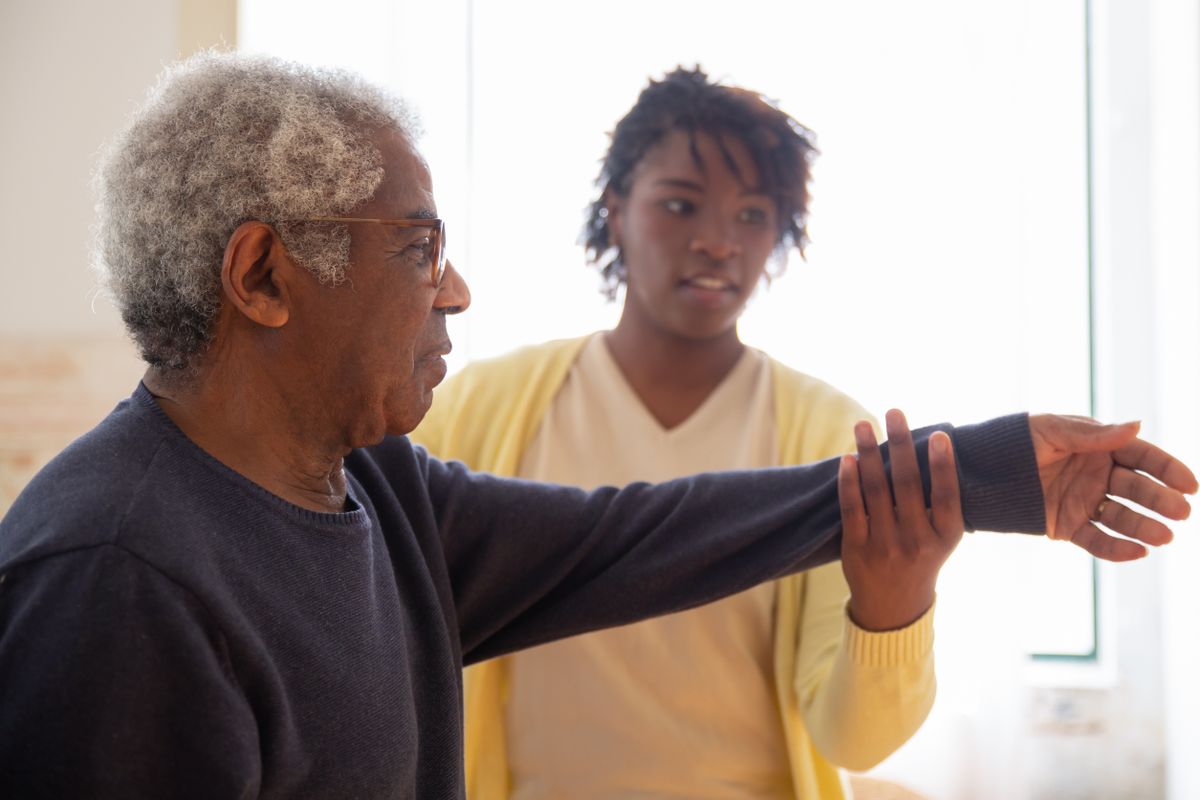
Midweek is strength, but only the useful kind: sit-to-stand from the real chair, five times, with a companion close and a rest afterward. Ankles get a few slow circles. We stop while the person still feels successful. Fatigue is not a badge in senior rehabilitation; it is how the next fall gets invited.
Later in the week we walk the home together. Rugs that curl are taped or retired. A favorite chair may move six inches so the walker does not catch a lamp cord. These are small domestic decisions, and they matter more than a poster of exercises taped to the fridge and ignored.
What families can watch
New bruises on the shin, a reluctance to shower, or furniture that has quietly migrated into a trail of handholds are early signs. So is a new reluctance to leave the house. Fear of falling changes a life even when the fall itself has not happened yet. Mention it at the next visit. We would rather practice a turn in the kitchen than meet someone after a night on the floor.
If dizziness, chest pain, or a sudden inability to stand appears, that is not a week-long project. Seek urgent medical help. Gimbaran plans the steady weeks; emergency services handle the sudden ones.